I have been waiting for the right time to review an album from Big Big Train for a while now. Many friends have been telling me to both listen to and review one of their albums. Well, this is the time, and the year.
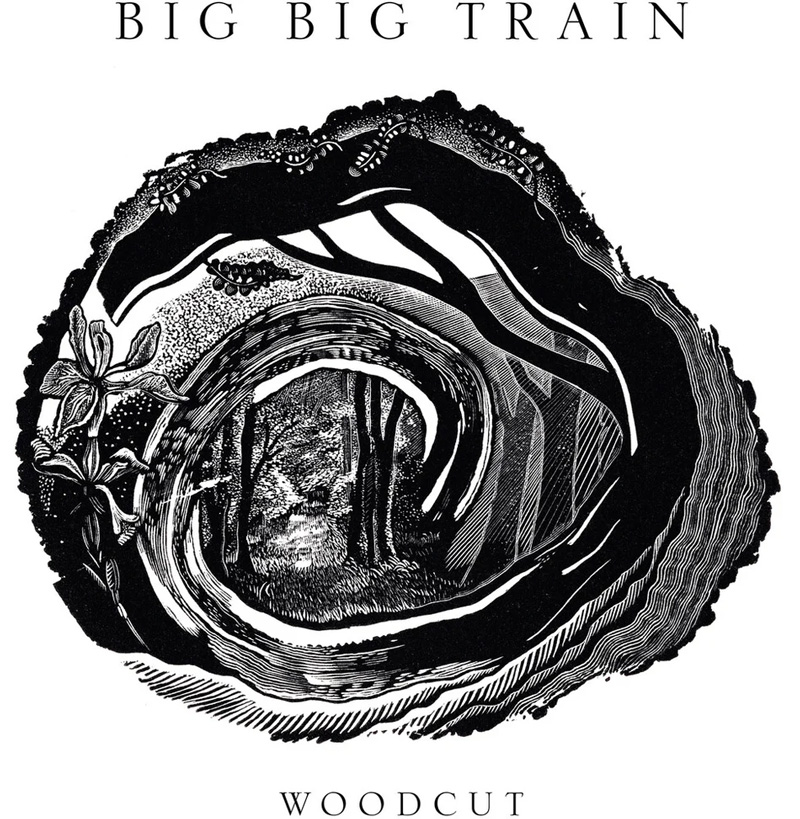
Woodcut is the 16th studio album by the award-winning English progressive rock band Big Big Train. It was released on February 6, of this year, through InsideOut Music. And, it is their very first full-length narrative concept album. The album was produced by frontman Alberto Bravin.
The album’s conceptual story involves: “The character known simply as “The Artist”. He is struggling, like us all, with his life. He is currently experiencing a creative block. So, he decides to carve a piece of heartwood. As he creates a woodcut print that he deems exceptionally beautiful, he finds himself magically stepping through a “Narnia-style” boundary into a parallel, monochrome world, born directly from his own artwork. The album serves as a handcrafted, deeply human exploration of art, faith, endurance, and the heavy sacrifices required by the creative process.”
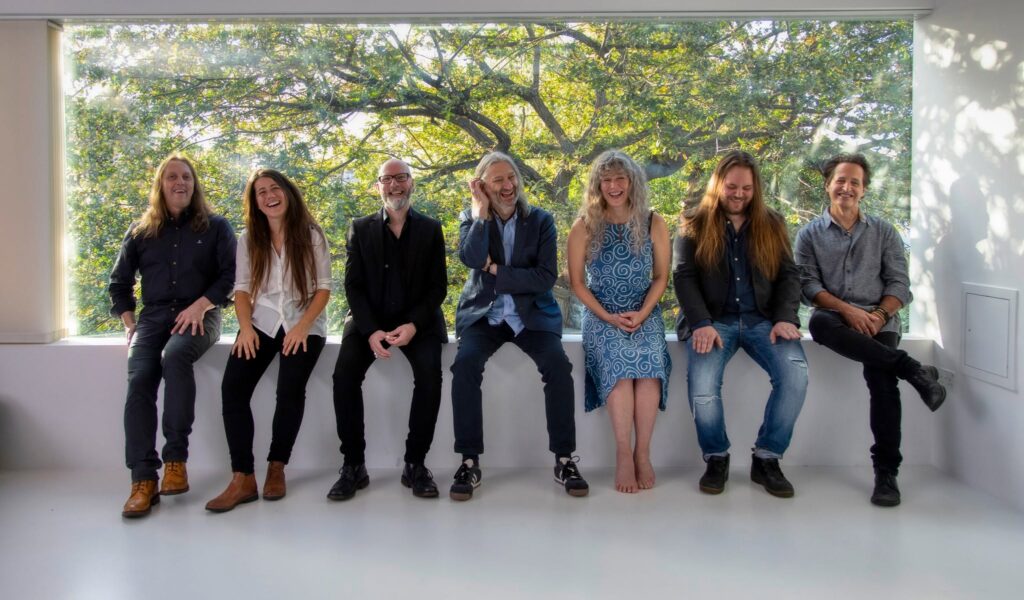
Big Big Train is made up of band members: Alberto Bravin, on vocals, guitars, keys, and production; Gregory Spawton, on bass, pedals, 12-string, and backing vocals; Nick D’Virgilio, on drums, percussion, keys, guitars, and backing vocals; Rikard Sjöblom, on guitars, Hammond organ, and backing vocals; Oskar Holldorff, on pianos, organ, synths, and backing vocals; Clare Lindley, on violin, acoustic guitar, and backing vocals; and Paul Mitchell, on trumpet, piccolo trumpet, and backing vocals. Guest Musicians include: Brian Mullan (credited as Mullen), on cello; and Maddie Wegg, on clarinet and flute.
Big Big Trainrequested Dorset-based artist Robin Mackenzie to create a striking, physical black-and-white woodcut print specifically for the album cover. To complement the listening experience, author Andrew Stuart released a companion book simultaneously with the album, titled “Woodcut: The Making and The Meaning.” In addition, my CD Digi-Pack included a Blu-ray, with a Dolby Atmos 5.1 mix of the album.
“Inkwell Black,” opens with strings settling into a slow melancholy melody, filled with flute and clarinet. It is an instrumental beginning to set you at ease, as you process these first sounds from this elaborate and well performed album of majestic progressive rock…like I remember growing up with in the 1970s. Just under a minute of warm music to set the stage.
Right before, one of the best and deepest songs lyrically on the album, “The Artist,” takes over. This is the album’s first single, and the music video is worth a view for its intricate storyboarding and almost “painted” artwork. The Artist emerges, after his “creative room,” is materialized before our eyes. The Abraham Lincoln resemblance of the artist also slowly materializes before your eyes. Then, the symbolism and visions of the chaos of the creative process take over. The Artist then walks off to the forest for more ideas and inspiration. The song, is full of most of the instruments on the album. Lead electric guitar, bass, drums, Hammond organ, trumpet, keyboards and flute fill the air and build a progressive rock soundscape that Genesis or Yes would appreciate. The opening pounding drums and nimble guitar work are wonderful, innovative, and different. They help differentiate this music immediately. Alberto Bravin has a hard voice to compare to any current or legendary prog vocalists. Instead, my first impressions remind me a little of one of my favorite vocalists, from right here in Washington State, USA. Michael Trew from Moon Letters. His voice may also be a great blend of Michael Trew and Gazpacho’s Jan-Henrik Ohme. The music is absolutely just what the progressive rock doctors requested and have needed to hear, after years of hopelessly waiting. Yes, those who told me to listen to and review this music were correct. It is worthy!
This album is like Pink Floyd’s Dark Side, in that it is a continuous album where tracks run on to the next song. “The Lie of the Land,” picks up where the last song left off, this time with piano. The soft piano reminds me so much of Atomic Time’s best piano parts from “Subsounds.” Maybe someone was listening to that album besides me, after all. I do hope so. Alberto Bravin sings, “Take time. To step outside. A path. That leads somewhere. Far from the city streets. On the hillside. Clings a wood. Where I can. Find a way.” Yes, get back to nature, everyone! We all need it so bad right now. Hopefully it will give us back our empathy. Alberto continues, “The lie of the land. Carries me onward. No place for a man. Under the shroud. I am far out of bounds. The going is hard. I am lost. These broken boughs. Oak, ash and elm.” Yes, a just under 3 – minute salute to nature and the woodlands. Ian would be happy to hear another, “Song from the Wood!’ Indeed.
“The Sharpest Blade,” opens with some of the best synthesizers, I have heard since Atomic Time’s five track album spectacular. Strings and violin introduce the song. The quieter pace and wandering melody is absolutely wonderful. Alberto Bravin sings, “Quiet is the morning’s mood. The distant sound of city hum and river running. Are respite from the voices. That visit through the night. Only use the sharpest of blades. Guided by the steady hand and quiet mind.” During this section Alberto definitely sounds more like Michael Trew. This is another of the album’s singles…and a great choice, for sure.
The origin of the term, “Albion Press,” comes, as Google states, “from a model of the early iron hand printing press, originally designed and manufactured in London by Richard Whittaker Cope. The song opens with some very intricate keyboards and synths before the power drums, electric guitar, bass and yes, trumpet, are added to build the much louder and heavier soundscape. It builds rather quickly, like a Yes thunder, roar. Alberto Bravin, steps into a quiet moment like I remember James LaBrie on a famous Dream Theater song, that I just can’t place right now. Oh yeah, the middle of “Voices.” Alberto sings, “Step back, take an overview. Take in all the scenery. Better than it’s ever felt. This could be a masterpiece. Pictures in my mind. I’ve always seen in black and white. I never thought the colors could change. Right before my eyes. And I never thought I was one step away. Following a whisper on the breeze.”
Google describes, “Arcadia,” as, “an idealized, utopian vision of unspoiled wilderness, rustic innocence, and harmony with nature.” I think the song on this album, “Arcadia,” captures that feeling well. It opens with low bass and bell-like keyboards and flute. So warm is the introduction with synthesizers joining in. It sounds like a morning wake up song. Alberto sings, “Morning lights the room.
A room which has no walls. A murmur fills my ears. The sound of distant birds.
I walk into a world. Shaped by my own hand. Once in inkwell black. Now a spring and summer land.” Yes, it is one of the warmest, fireside songs on the album. Wonderful with all the strings. There is a sound and feeling of early Kansas in this song.
“Second Press,” is a short instrumental that opens with sad violin and surrounding strings. It last, just over a half – minute.
Before, “Warp and Weft,” kicks off with guitar, drums and bass. The breezy synths and orchestration sound almost makes me think of some Chris Squire innovations. Alberto sings, “I stare inside – I can’t stop. Deep down – I’m tied up in knots. Knife in, carve out, precise, calm down. Each cut – each push of my blade. Finds more of me every day.” Then, Alberto starts a round of vocals with Clare Lindley, as they spiral together and complete the lyrics. A wonderful Tony Banks-like synthesizer section sounds so great, as it takes over the soundscape. Unfortunately, the keyboards and synths are replaced with lead electric guitar, bass, and drums.
“Chimaera,” opens with soft guitar set to a memorable Jethro Tull-like melody. Alberto sings, “Let us speak of turning the page. Starting over. Beginning again. Let me show how. I found a new way. With each cut made. I follow the grain. Are we just a flare on a lens. A trick of light in the end. A skimming stone on the water?” At the end I hear the similar sound of ELO’s wonderful “Elderado,” ending.
“Dead Point,” opens with direct electric guitar, and colorful keyboards. Alberto sings, “No turning back. I follow the path and see that it leads me. Much further in. The wood seems to wait. Holding its breath. Like it’s afraid. If you can’t run, you’d better be really still.” Flutes and strings filter into the mix to blend the sound and make is surreal. Later on, the heavier electric guitars, drums and choirs bring memories of Queen. Then, they turn on the Banks’-like keyboards again and I’m mesmerized.
“Light Without Heat,” opens with wonderful soft acoustic guitar. Alberto sings, “It’s not how it’s meant to be. The light doesn’t carry heat. The leaves don’t catch the breeze. The colors don’t ring true. I can’t ignore the truth. I’m not where I wanna be. But still, it’s hard to leave. Home is calling me.” Later, the electric guitar solos are wonderful.
“Dreams In Black and White,” opens with Clare Lindley singing, “I only dream in black and white. Should not see the color.” Alberto joins in, “Heart thumping, shallow breathing. Pinch myself. Something isn’t right. Open my eyes, I need to wake up from lucid dreaming. I’ve run all night. And I’m still nowhere. I cannot find the path. No light to follow. I can’t find a way back to the path that leads me home. No place for a man under the shroud. I’m out of bounds.” The electric guitar soloing, along with the strings and violin make for a wonderful sound.
“Cut and Run,” is a Supertramp-like keyboard instrumental, with electric guitar, bass and thumping drums. Love that cool “Batman,” like guitar rhythm in the middle of the song. They give the keyboardist a chance to shine on again. The best instrumental on the album.
“Hawthorn White,” is a wonderful piano moment for the keyboardist. Along with deep strings, they create another of the band’s best instrumentals.
“Counting Stars,” is another single off the album. It is full of wonderful acoustic guitar, at the opening. Alberto sings, “Dreaming in gold. In gold and in green. Rolling hills and woodland. And places in between. The rain setting in. As autumn follows summer.” Memories of “Trick of the Tail” fill the mind as the acoustic guitar and keyboards abound. Alberto sings, “The order of things. Day turns into night. Earth spinning round and round. From darkness to light. Facing the sky. Watching the sunset. And moonrise. Underneath the heavens. Counting stars. And distant worlds. The hope that remains. But all things turn full circle. And come around again. Winter to spring. Snowfall to sunshine.” Beautiful strings and horns take the soundscape even higher.
The closer and final track on the album is “Last Stand.” It opens gloriously with fiery lead electric guitar, bass, and drums. Alberto sings, “Oh, let me be free. Light doesn’t promise heat. Carving out the negative space. Cut it with a steady hand. With certainty. Time to speak of love and hope. Life and death and letting go. Take each day not as it comes. Make it new and make it your own. The paths that you choose. Can lead you astray. All roads we take. End the same way. Whether we are. Hunter or prey. Doubter, believer. Depends on the day. And where will you go. As time’s arrow flies? When will you reach. The end of the line? One final stand. The world spins around. There’s gold in the skies. Find it. Keep moving on.”
Big Big Train’s “Woodcut,” is full of the wonders of progressive rock that we miss so much. It has reminders of Steve Hackett’s guitar playing throughout the album. I hear some Atomic Time. I hear Moon Letters. I hear the best of Dream Theater, like “Awake,” and “Images and Words,” There is a wonderous similarity between the sound and length of this album and the Rocking Horse Music Club’s “The Last Pink Glow.” Everything about this album is a wonder to behold. A fortune in sound created just for you. I like Big, Big, Train’s “Woodcut,” and would recommend it to anyone. It is a chance to hear the sounds of the progressive rock that I grew up with created anew. Take the time and listen to the entirety of “Woodcut,” and enjoy all of its intricate blend of progressive rock’s favorite and less remembered instruments. Get onboard and ride Big, Big, Train’s “Woodcut,” and listen to this “wonderous story!”
Album Track List:
- Inkwell Black (0:56)
- The Artist (7:16) — Lead Single
- The Lie of the Land (2:55)
- The Sharpest Blade (4:16) — Single
- Albion Press (5:46)
- Arcadia (5:46)
- Second Press (0:37)
- Warp and Weft (3:45)
- Chimaera (5:37)
- Dead Point (5:28)
- Light Without Heat (3:22)
- Dreams In Black and White (2:34)
- Cut and Run (6:19)
- Hawthorn White (1:54)
- Counting Stars (5:40) — Single
- Last Stand (3:34)
Band Website and Social Media Links:
https://bigbigtrain.bandcamp.com/album/woodcut-24-bit-hd-audio
https://www.facebook.com/bigbigtrain
https://www.facebook.com/groups/bigbigtrain
YouTube and Music Video Links: