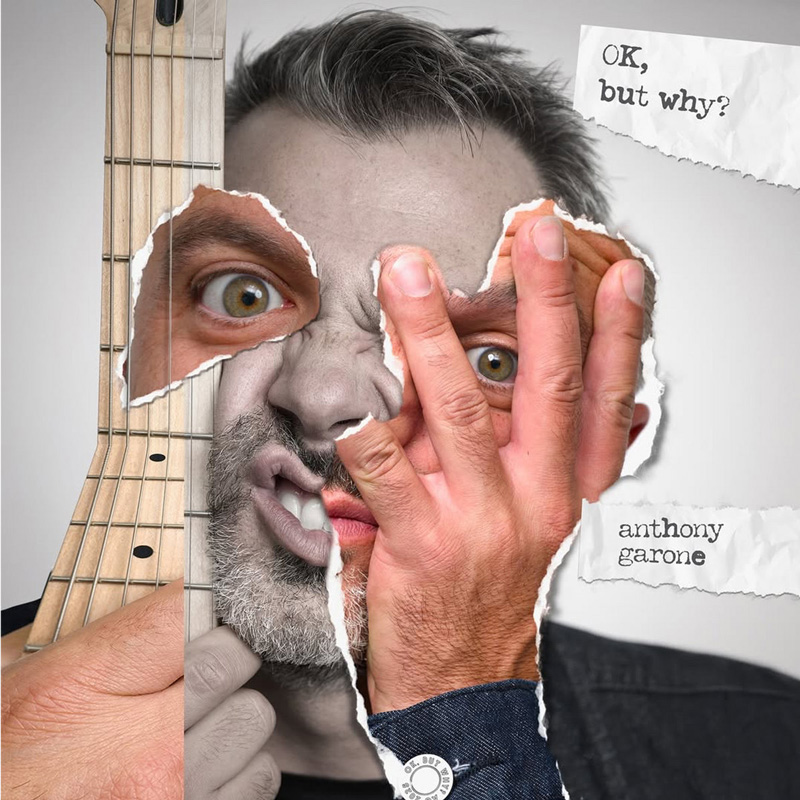
Anthony Garone – OK, but why? (Moonjune Records, 2026)
Anthony Garone, founder of the progressive music platform Make Weird Music, has released his first full-length album since 2007 with OK, but why? The 14-track collection features contributions from 20 guest musicians and revisits material that originally appeared in various YouTube releases in the past years.
Garone built a reputation through more than 600 videos focused on progressive music, odd-meter composition, and technically demanding performances. However, OK, but why? is his first large-scale studio project in nearly two decades. The album combines newly recorded parts, remixed material, and updated arrangements into a single release intended to connect ideas developed over several years.
The quirky record balances intricate counterpoint, shifting rhythmic structures, and melodic songwriting. Although the arrangements often lean toward complexity, Garone said that accessibility remained essential to the project’s direction.
Various tracks highlight that approach. “Binge,” originally known as the Make Weird Music theme, presents alternating 9 and 7 meter patterns and features drummer Morgan Ågren alongside bassist Michael Manring. Elsewhere, “Dance” reworks a joke demo into a 13/4 composition built around whole-tone harmony and prime-number melodies, with guest appearances by Tom Monda and Owen Dueck.
Meanwhile, “Brex” creates the illusion of straight 4/4 while operating against a 5/4 structure. The track includes electric bassoon work by Paul Hanson and references rhythmic concepts associated with progressive rock band King Crimson. “Harnch 2.0” revisits an earlier composition inspired by Pat Metheny and Gentle Giant, with a featured solo from guitarist Gretchen Menn.
In addition, the album includes Garone’s reinterpretation of “Erudite Eyes” by Robert Fripp, originally recorded by Giles, Giles & Fripp, along with two movements from Bach’s BWV 1060. Garone noted that portions of the Bach material proved exceptionally difficult even for the session musicians involved.
The album title reflects a personal turning point for Garone. After his previous release sold fewer than 100 copies, he questioned whether there was an audience for the music. Nevertheless, he continued writing and eventually assembled the material into a cohesive record.
Beyond his recording work, Garone is known for documenting his 22-year effort to learn “Fracture” by King Crimson in the book Failure to Fracture and an accompanying YouTube series.